Market Notes
Updated: 3/27/2026
Weekly export sales continue to run ahead of USDA pace. Corn area with drought conditions now at 41%. Chart points to watch now are $4.76 where there should be resistance and $4.49 where there should be support. Markets were higher overnight. News continues to drive global market volatility. The latest headline of the moment came yesterday when President Trump posted on social media that he was delaying his potential attack on Iran’s energy infrastructure another ten days, until April 6. President Trump continued to state that negotiations to end the war were progressing well, despite Iran’s contradictory statements. This is seeming to happen with positive, optimistic statements from Trump but contradictions of other countries. This has the market walking on eggshells having some days with large price swings.
The USDA will release their annual Prospective Plantings and quarterly Stocks reports next Tuesday, March 31. This report is an estimate and much can change before the final numbers come out in June. However, it can create futures to move in one direction or another. There is normally a fight for acreage during planting. Target prices and attention from farmers need to be continued as well as we need to be proactive to call farmers when we see large market moves since the farmer will be too busy with other farm activities. A Farm Futures magazine survey found 2026 U.S. corn plantings at 96.4 million acres, down from 98.8 mln last year but above the USDA Ag Forum figures of 94.0 mln ac. Soybean acreage came in at 86.0 mln ac, up from 81.2 mln ac in 2025 and a million above the Ag Forum number as well.
The U.S. Environmental Protection Agency released its final RVO guidelines today - something the industry has been waiting for since the summer of 2024. A quick look at the document suggests that foreign feedstocks used in the production of biofuels will get 50% RIN credit in 2028, after receiving 100% for this year and next year. The overall mandate suggests 5.4 billion gallons of biomass diesel for the current year using a 1.64 conversion, and 5.7 billion gallons in 2027 using a 1.57 conversion. These totals are up from 3.35 billion gallons in 2025, marking the largest increase in the mandate in history. Furthermore. 70% of the roughly 2 billion RIN small refinery exemptions have been reallocated to larger refineries for 2026 and 2027. Overall, this should be very strong for feedstock demand. Soybean oil supplies built up over the past year, but those inventories should be well utilized over the coming year.
Weekly export numbers running behind last year’s pace. Soybean meal up today as Argentina crush numbers drop. There is no change in the technical picture as they remain sidelined as far as short term direction goes with headline news this week going to dominate trading action. If the chart points can be trusted; they show support at $11.45 with resistance at 11.70 up to $11.77 with today’s high at $11.76 ¾.news remains in control with several market issues keeping the soybeans in volatile conditions and well bid on breaks. The closure of the Strait of Hormuz has the energy markets showing extreme volatility which is keeping the beans supported. Then there is the meeting between President Xi Jinping and President Trump which has been set for May 14thand 15th. The bearish headline news has to do with more acres shifting from corn to beans due to fertilizer shortages as well as ideas the Strait of Hormuz could re-open soon. Given the current narrative, it is easy to see why headline news is the driving force.
John R. Anderson, Vice President of Grain
Managing Risk to Optimize Price
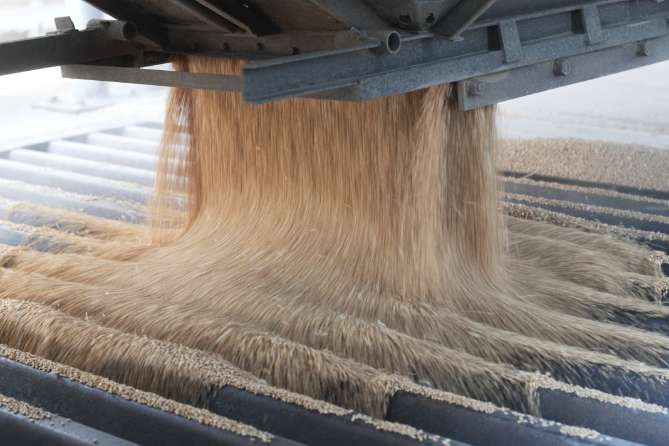
Grain and oilseed markets can be complex and fluid, and the best opportunity one minute can change in the next. The grain team at Farmers Union Cooperative is here to provide a strategic, forward-thinking approach to marketing that will help you manage volatility and realize a better overall outcome from your grain sales.
Because of our geographic location, we have several choices in where we sell grain. This provides us with unique opportunities to market your grain and diversify your portfolio to manage risk.
We often work with our farmer-members to put together sales to achieve a better price. Whether you sell to us, a processor, or a river terminal, we’ll help you capture a better price with delivery terms that work for you (whether you deliver or utilize our services).
Our facilities
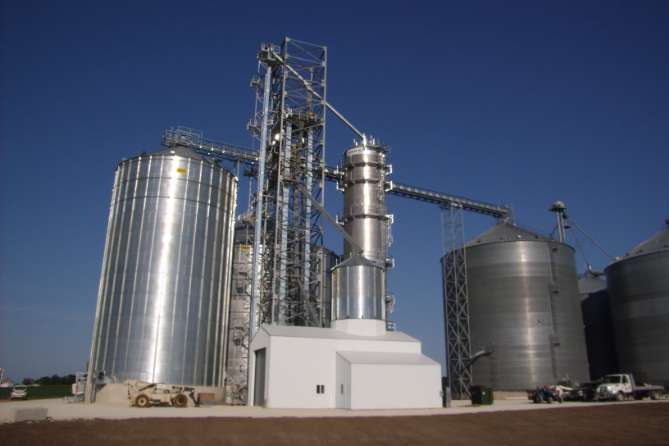
We have facilities in Ossian, Fort Atkinson, Postville, Waucoma and Manchester that receive corn, soybeans and oats. Our New Albin location handles corn only.
Grain delivered to our feed mills is used in the area as livestock feed. You can also utilize our grain bank service for your own feed needs.
We make regular investments in our facilities to ensure a smooth unloading process, and we have storage of around 6.5 million bushels.
During the busy fall season, we flex our hours to keep grain moving and get you back to the field as soon as possible.
Farmers Union Grain Contacts
For more information on any of our grain services, contact Farmers Union’s grain team:

Melissa Wedo
Grain Accounting

David Schneiter
Location Manager-Fort Atkinson/Waucoma
Farmers Union Grain Locations
Cash Bids
Futures
Grain Programs
We offer numerous specialized marketing contracts that help spread risk and take advantage of opportunities when they arise. Please talk to us about your objectives, and we’ll work with you to choose contracts that fit your risk tolerance and profit goals.
In addition to grain contracts, we offer services such as discounted drying at the beginning of the fall season. We also can do on-farm pickup with our trucks, and we can deliver to direct-ship locations at your request.